
Hindi Lipi Learning Tool
Helping beginners learn Hindi through memorable visual associations and interactive practice
Project Type: E-Learning Platform Development
Role: Project Associate and UX/UI Designer
Tools: Pressbooks, H5P, Adobe Illustrator, Canva, Figma
The Challenge
Context
Hindi Lipi is an interactive Hindi (Devanagari) learning tool developed in collaboration with Hindi faculty at Penn State. The platform uses visual associations, multimedia exercises, and accessibility-focused design to support language acquisition for non-native learners.
The Problem
What makes learning the Hindi script so difficult?
Memorizing unfamiliar characters
Staying engaged through repetitive practice
Accessibility considerations for diverse learners
Project Goal
Design an interactive learning experience that makes learning Hindi characters more intuitive, engaging, and accessible.
Understanding the Learner
Research
Reviewed existing Hindi learning resources
Worked with Hindi faculty
Defined educational objectives
Evaluated existing teaching methods
Key Insights
💡Learners retain characters better through visual associations
💡 Learning should reinforce recall instead of passive memorization
💡 Immediate feedback keeps learners engaged
Designing the Learning Experience
I contributed to the design and development of Hindi Lipi by creating visual learning systems, designing interactive educational exercises, and collaborating with faculty to expand the platform over multiple semesters.
Creating memorable object-letter associations
I designed educational interactions that encouraged active participation rather than passive memorization. Exercises combined visual cues, matching activities, and multimedia content to reinforce Hindi character recognition.
Object-Letter Learning System

Original Devanagiri Letter (pa)
+
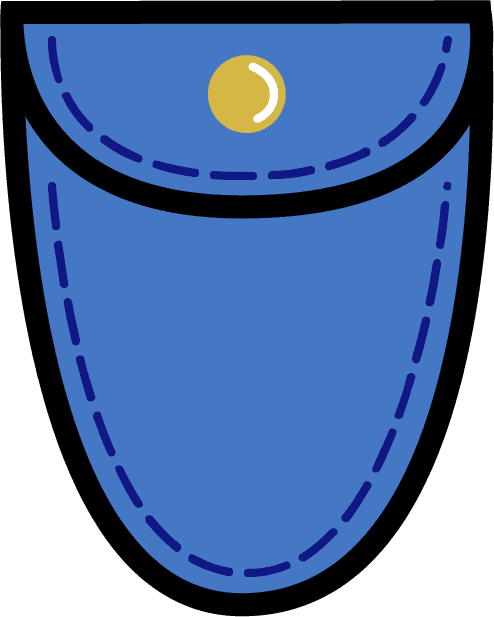
English Word Design (pocket)
=
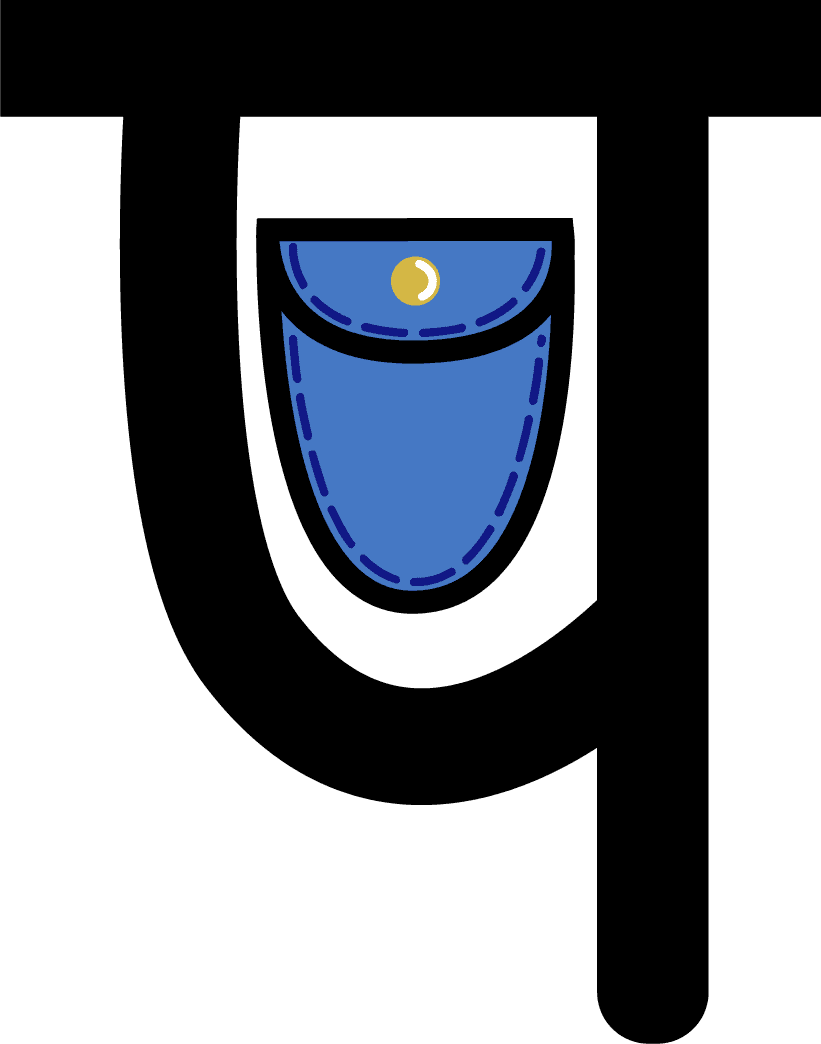
Letter-Object Association (pocket)
To support vocabulary retention, I created 50+ word-letter associations that integrated visual objects directly into Devanagari letterforms.
Object-Letter Association Design Pattern
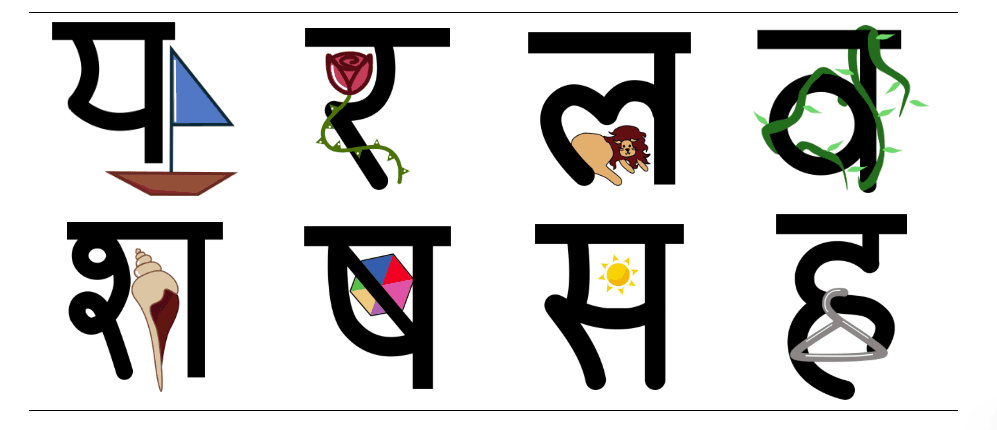
Every association followed three rules
✔ Preserve the original letterform
✔ Choose universally recognizable objects
✔ Reinforce pronunciation whenever possible
Making Learning Active
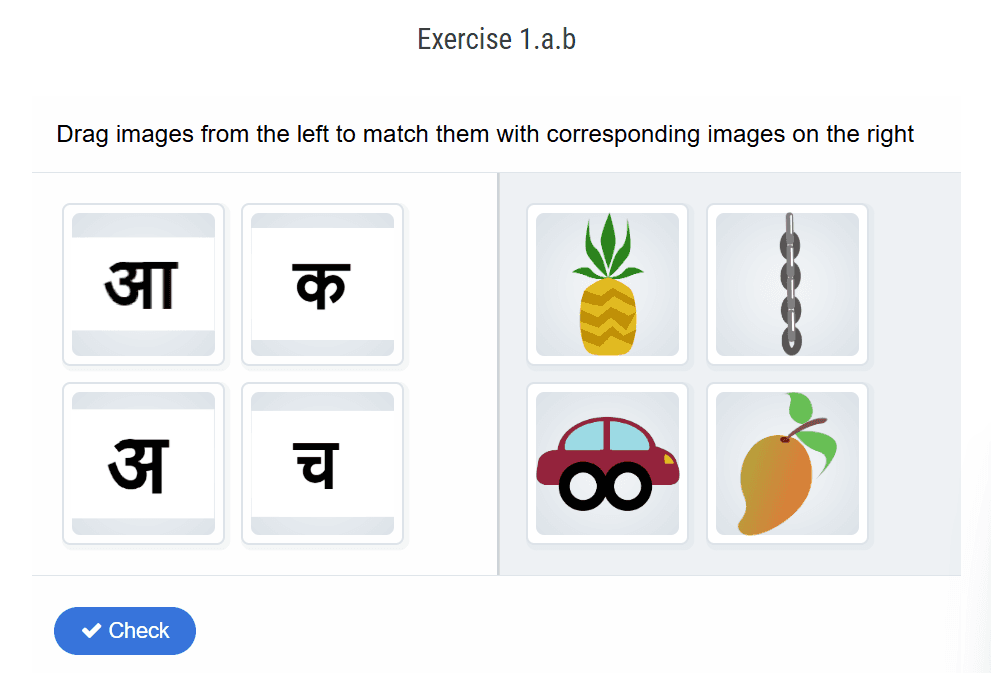
I designed interactive matching activities that helped learners connect characters with familiar visual references through active recall and repetition.
Sample Interactive Exercise
Designing for Accessibility
To ensure the interface was accessible to learners with varying visual abilities, I adhered to WCAG standards through processes such as evaluating text and UI color combinations using the WebAIM Color Contrast Checker. I adjusted the color palette to meet accessibility requirements while maintaining the platform’s visual identity. Additionally, I collaborated with accessibility experts at the university to ensure the platform remained usable for learners with diverse backgrounds and needs.
Collaboration and Iteration
The project evolved through ongoing collaboration with Hindi faculty, with new exercises, content, and learning modules added over time based on instructional needs.
Impact
The platform supported Hindi instruction at Penn State through dozens of interactive exercises and visual learning assets, contributing to a published academic article and expanding access to engaging language-learning resources.
50+
Object-Letter Association Designs
60+
Interactive Exercises
Published
Reflection
This project reinforced that effective educational experiences aren't created by adding more features: they're created by understanding how people learn. Designing Hindi Lipi challenged me to balance pedagogy, accessibility, and interaction design in a way that made learning feel approachable and rewarding.
Back to Home
Bhavya Aplash
" width="28.99999973673973px"><path d="M 0 11.205 L 0 2.13 C 0 0.954 0.958 0 2.139 0 L 11.254 0 C 12.435 0 13.393 0.954 13.393 2.13 L 13.393 11.205 C 13.393 12.381 12.435 13.335 11.254 13.335 L 2.139 13.335 C 0.958 13.335 0 12.381 0 11.205 Z" fill="transparent" height="13.334990525247079px" id="CtFS1cuaN" stroke-dasharray="" stroke-linecap="butt" stroke-linejoin="miter" stroke-miterlimit="10" stroke-width="2" stroke="rgb(255, 255, 255)" transform="translate(7.962 7.047)" width="13.393186653886264px"/><g fill="transparent" height="7.284671984870601px" id="PDbWlPIJF" transform="translate(2.409 0.937)" width="7.3162578508457425px"><path d="M 3.658 7.285 C 5.678 7.285 7.316 5.654 7.316 3.642 C 7.316 1.631 5.678 0 3.658 0 C 1.638 0 0 1.631 0 3.642 C 0 5.654 1.638 7.285 3.658 7.285 Z" fill="transparent" height="7.284671985035864px" id="aX1sim0kP" stroke-dasharray="" stroke-linecap="butt" stroke-linejoin="miter" stroke-miterlimit="10" stroke-width="2" stroke="rgb(255, 255, 255)" transform="translate(0 0)" width="7.316257854498099px"/></g><g fill="transparent" height="7.284671984870601px" id="r85_Sxutb" transform="translate(2.409 0.937)" width="7.3162578508457425px"><path d="M 3.658 7.285 C 5.678 7.285 7.316 5.654 7.316 3.642 C 7.316 1.631 5.678 0 3.658 0 C 1.638 0 0 1.631 0 3.642 C 0 5.654 1.638 7.285 3.658 7.285 Z" fill="transparent" height="7.284671985035864px" id="EDdfOvMWa" stroke-dasharray="" stroke-linecap="butt" stroke-linejoin="miter" stroke-miterlimit="10" stroke-width="2" stroke="rgb(255, 255, 255)" transform="translate(0 0)" width="7.316257854498099px"/></g><g fill="transparent" height="7.284671984870601px" id="sqtA6KJLZ" transform="translate(19.859 0.937)" width="7.316257829505798px"><path d="M 3.658 7.285 C 5.678 7.285 7.316 5.654 7.316 3.642 C 7.316 1.631 5.678 0 3.658 0 C 1.638 0 0 1.631 0 3.642 C 0 5.654 1.638 7.285 3.658 7.285 Z" fill="transparent" height="7.284671985035864px" id="xwrKJOJvn" stroke-dasharray="" stroke-linecap="butt" stroke-linejoin="miter" stroke-miterlimit="10" stroke-width="2" stroke="rgb(255, 255, 255)" transform="translate(0 0)" width="7.316257854498101px"/></g><g fill="transparent" height="7.284671984870601px" id="Wa2EhJHSS" transform="translate(19.859 0.937)" width="7.316257829505798px"><path d="M 3.658 7.285 C 5.678 7.285 7.316 5.654 7.316 3.642 C 7.316 1.631 5.678 0 3.658 0 C 1.638 0 0 1.631 0 3.642 C 0 5.654 1.638 7.285 3.658 7.285 Z" fill="transparent" height="7.284671985035864px" id="XRDnHHDiA" stroke-dasharray="" stroke-linecap="butt" stroke-linejoin="miter" stroke-miterlimit="10" stroke-width="2" stroke="rgb(255, 255, 255)" transform="translate(0 0)" width="7.316257854498101px"/></g><g fill="transparent" height="7.284671996059274px" id="YPbofP6YW" transform="translate(2.409 19.192)" width="7.3162578508457425px"><path d="M 3.658 7.285 C 5.678 7.285 7.316 5.654 7.316 3.642 C 7.316 1.631 5.678 0 3.658 0 C 1.638 0 0 1.631 0 3.642 C 0 5.654 1.638 7.285 3.658 7.285 Z" fill="transparent" height="7.284671985035942px" id="C8bUgZdPG" stroke-dasharray="" stroke-linecap="butt" stroke-linejoin="miter" stroke-miterlimit="10" stroke-width="2" stroke="rgb(255, 255, 255)" transform="translate(0 0)" width="7.316257854498099px"/></g><g fill="transparent" height="7.284671996059274px" id="xKDPWjfq2" transform="translate(2.409 19.192)" width="7.3162578508457425px"><path d="M 3.658 7.285 C 5.678 7.285 7.316 5.654 7.316 3.642 C 7.316 1.631 5.678 0 3.658 0 C 1.638 0 0 1.631 0 3.642 C 0 5.654 1.638 7.285 3.658 7.285 Z" fill="transparent" height="7.284671985035942px" id="id56uvBeB" stroke-dasharray="" stroke-linecap="butt" stroke-linejoin="miter" stroke-miterlimit="10" stroke-width="2" stroke="rgb(255, 255, 255)" transform="translate(0 0)" width="7.316257854498099px"/></g><g fill="transparent" height="7.284671996059274px" id="c9s0mJcKs" transform="translate(19.727 19.192)" width="7.31625786482066px"><path d="M 3.658 7.285 C 5.678 7.285 7.316 5.654 7.316 3.642 C 7.316 1.631 5.678 0 3.658 0 C 1.638 0 0 1.631 0 3.642 C 0 5.654 1.638 7.285 3.658 7.285 Z" fill="transparent" height="7.284671985035942px" id="QrHAgjaxE" stroke-dasharray="" stroke-linecap="butt" stroke-linejoin="miter" stroke-miterlimit="10" stroke-width="2" stroke="rgb(255, 255, 255)" transform="translate(0 0)" width="7.316257854498101px"/></g><g fill="transparent" height="7.284671996059274px" id="ICvlbGvus" transform="translate(19.727 19.192)" width="7.31625786482066px"><path d="M 3.658 7.285 C 5.678 7.285 7.316 5.654 7.316 3.642 C 7.316 1.631 5.678 0 3.658 0 C 1.638 0 0 1.631 0 3.642 C 0 5.654 1.638 7.285 3.658 7.285 Z" fill="transparent" height="7.284671985035942px" id="wUy0uEGcM" stroke-dasharray="" stroke-linecap="butt" stroke-linejoin="miter" stroke-miterlimit="10" stroke-width="2" stroke="rgb(255, 255, 255)" transform="translate(0 0)" width="7.316257854498101px"/></g><path d="M 14.668 3.172 C 15.547 3.172 16.26 2.462 16.26 1.586 C 16.26 0.71 15.547 0 14.668 0 C 13.788 0 13.075 0.71 13.075 1.586 C 13.075 2.462 13.788 3.172 14.668 3.172 Z M 27.407 15.291 C 28.287 15.291 29 14.581 29 13.705 C 29 12.829 28.287 12.119 27.407 12.119 C 26.527 12.119 25.814 12.829 25.814 13.705 C 25.814 14.581 26.527 15.291 27.407 15.291 Z M 14.79 29 C 15.67 29 16.383 28.29 16.383 27.414 C 16.383 26.538 15.67 25.828 14.79 25.828 C 13.91 25.828 13.197 26.538 13.197 27.414 C 13.197 28.29 13.91 29 14.79 29 Z M 1.593 15.291 C 2.473 15.291 3.186 14.581 3.186 13.705 C 3.186 12.829 2.473 12.119 1.593 12.119 C 0.713 12.119 0 12.829 0 13.705 C 0 14.581 0.713 15.291 1.593 15.291 Z" fill="transparent" height="28.999998523542306px" id="H5iq42b9v" stroke-dasharray="" stroke-linecap="butt" stroke-linejoin="miter" stroke-miterlimit="10" stroke-width="2" stroke="rgb(255, 255, 255)" width="28.99999973673973px"/></g></svg>)
Thanks for stopping by! Contact me at aplashbhavya@gmail.com
© 2026 Bhavya Aplash